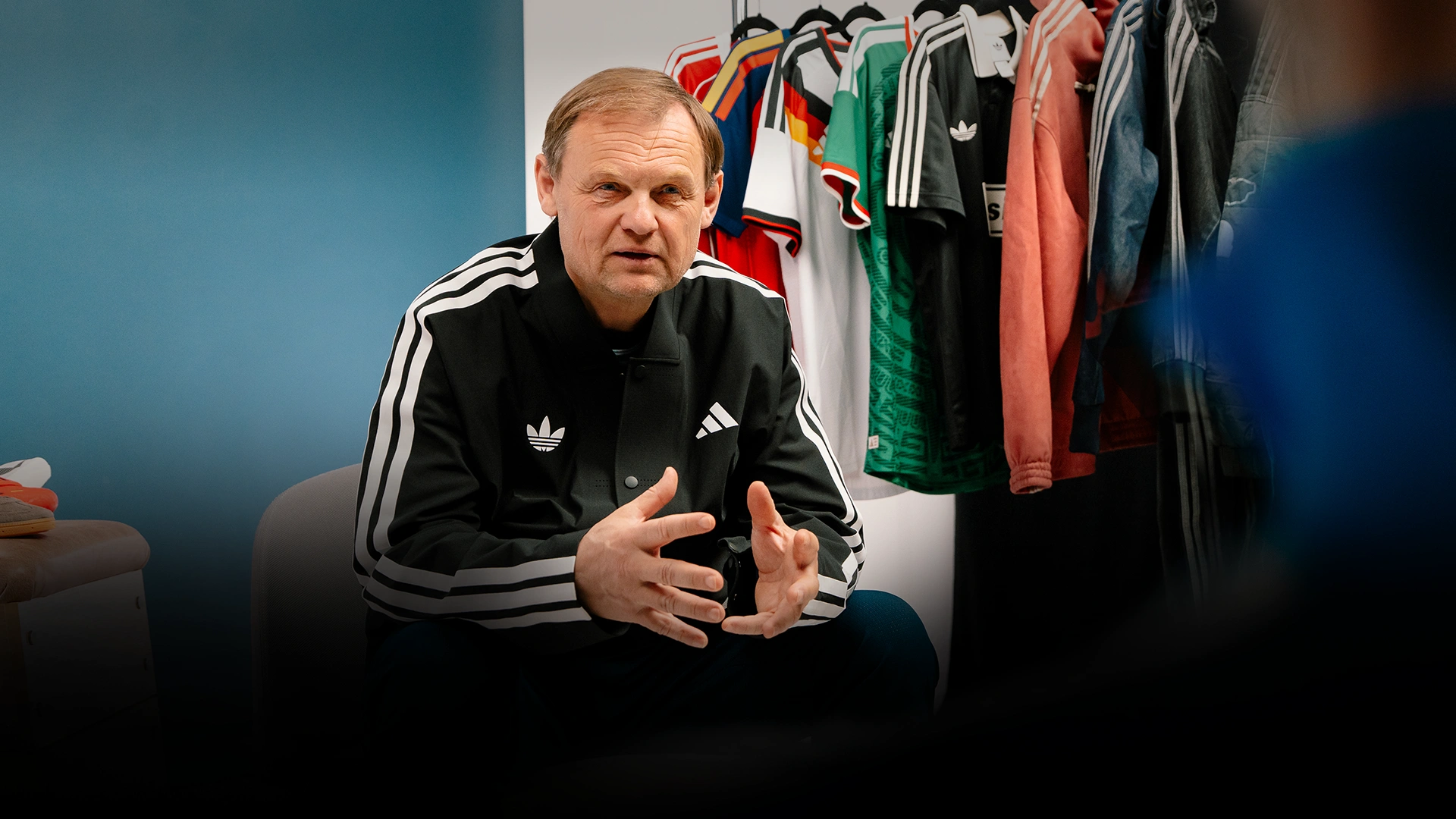
‘The global potential for adidas is almost unlimited’
Bjørn, 2025 was quite an eventful year, to say the least. Before we move to the business side, what was your most memorable sports moment last year?
Given the huge amount of great sports events on small or larger stages throughout the year, it wouldn’t be fair to call out just one. When people come together to do sports, this is always fantastic. I think it's fair to say that, for our brand, there were many events where we showed up both with our athletes and our products that were great. It was definitely a great sports year for our company.
Turning to the business, how would you summarize 2025?
I am very happy and proud of what our people have achieved. I am very happy when you look at our progress over the last three years, it's gone faster than we expected in many areas. In early 2023, we laid out what we thought we had to do over the next four years. 2025 was the third year, and we already achieved many of the goals we set ourselves. We first had growth in the Lifestyle area, especially driven by footwear, through which we created a lot of brand heat globally. We have gotten credibility in Performance again, also in categories where we thought that the road was longer. The development in Running – especially on the high end – has been great. In Football, we've taken back market leadership, and in Basketball, we have innovation and product that I think people didn't believe we can do that quickly. Our visibility in sports – both in big global sports and smaller local sports – has grown enormously. The fact that we have grown double digits for two consecutive years now and achieved double-digit growth all over the world in 2025 shows you the enormous power of this brand.
What’s driving this very broad success in your opinion?
First of all, credit to the fantastic brand and company we work for. The global potential for adidas is almost unlimited because we have 76 years of history, and we have so many stories to tell. While the brand has been culturally relevant in all our markets, we are now also back as a sports brand all over the world. The combination of the awareness, the history, the cultural relevance, and the performance credibility is quite unique. And becoming a global brand with a local mindset has been a huge enabler across all of this. The brand is strong, and we have very good and talented people that are utilizing the strength of the brand in the local markets. It’s now up to us how we leverage this in the right way, both in the short term and the long term.
Can you help us understand what ‘global brand with a local mindset’ means?
In a global world where information flows very quickly, you could believe that the choice of consumers is the same everywhere. But it clearly isn’t. We see that different markets have different developments when it comes to taste. The markets are more conscious of their own culture, meaning that the choice of the product, the usage of the product, the meaning of what sport is, are different. I can't force the consumer in China to buy the same product as in Norway. And we all know the difference between Europe and America when it comes to the sports that are relevant. We need to please the consumer where he or she is, all within the frame of the brand. We need to have a global frame that defines what adidas is, and how we should utilize the brand and have a vision for it. But then how we execute that in the different regions has to be different to be successful. We should still be a sports brand at our core, and we should be utilizing the strength of sports into local culture. And then, of course, there are lifestyle, fashion, and comfort elements to take into account.
If we look at the overall product offering last year across global and local, what are the products that you want to call out?
With the Samba, the Gazelle, and the Spezial, we really brought the brand back to the young female consumer. This isn’t something that happens quickly, it’s built over time, and it's very, very strong still. Then, I would call out how we extended the popularity of the Three Stripes from footwear to apparel. When you look at the sequence of that, it actually happened exactly that way. Running is another call-out, because it was the most difficult category for us to establish ourselves in at the top. Our teams have done a tremendous job, creating what – in my opinion – are the best running shoes. Once you have credibility at the top, winning marathons and setting records, it's easier to be commercially successful in everyday running and comfort running products. And that is, of course, the plan. I could also call out the Predator in Football, the Adizero Dropset in Training, or so many other examples of great products in our Performance categories. I can't point to one product or one segment. I am extremely proud to see what the teams have done. How creative and innovative we have been across the teams and categories. How the consumers have reacted to it the last three years showcases how good this brand is and the people behind it.
‘I am very happy and proud of what our people have achieved’
One of the things that you haven’t mentioned is the pet collection that has caught quite some attention globally after being launched in China. Are you trying to expand into new territories here?
I had nothing to do with that because that idea, of course, came from our China team. They used the popularity of adidas to extend the range. I would say it's a local marketing tool that has suddenly become a business. Again, it shows the creativity of the team. It shows that our teams on the ground know their consumers and what matters to them most. And it shows the impact of good ideas.
You mentioned in the past that it will take time for the improved and expanded product range to become fully visible in the trade. Where are you with that?
It’s different from market to market. It's obvious with the success of lifestyle footwear that many retailers wanted it very quickly and adopted it. But there are categories where we still don’t have the space we believe we should. We do think we are competitive, and there are many markets where we should be able to increase our space in the store and on the shelf. But as always, the retailers decide on who they allocate space to. If they do that rationally, they will allocate space to those who give them the highest contribution per square meter, and we think we can do that. We made huge progress in the last three years, but if you look at running for example, there are places around the world where we still have very little distribution, which again shows the huge opportunity we have in our hands.
How did listening to the retail partners and working closer with them change the assortment and how the brand shows up in the stores?
For me, listening to our retail partners is crucial. If you sit in headquarters and decide what should be in all the stores around the world, it’s simply not going to work. We have an open dialogue with consumers, with athletes, and with our retailers across the different markets. Our market teams have been very active in engaging with our retailers, and we have opened all our creation centers to work with them. We’ve seen improvements in that process, but it can always be better. We are getting very positive feedback from the retailers on the way we work, and how the flexibility and the speed of our creation teams have improved. We are on a very, very good way of giving this fantastic adidas brand the right platform to be market leader in many markets.
What has also grown is the roster of partners around the world, from global partners like Liverpool FC to more local ones like Penn State or Gilas Pilipinas, the national basketball team of the Philippines. What role do these partners play for adidas?
If you don’t showcase the brand with relevant partners, it will disappear over time. Our philosophy is that adidas should be visible and relevant. There are certain sports and partners that are very global, like football and Liverpool, and there are partners that are very local. Authentic partnerships that give us organic visibility are more important than paid media campaigns. That's why we are investing a lot in partnerships, both globally and locally – not only in sports, but in whatever is culturally relevant for the consumer in the different markets. It can be in fashion, it can be in music, and it can be in other areas that the consumer thinks is relevant.
2025 saw the return of adidas into motorsports. How did that go and what's going to happen next?
F1 is growing globally when it gets to viewership. And the viewership is getting younger and younger and they’re both female and male. We made the decision to team up with the Mercedes AMG Petronas F1 team very quickly, and our team did an unbelievable job launching it. I think we went from handshake to having products in the markets in under ten months. We now have one year behind us commercially, and it's been more successful than anybody expected. We have also added Audi Revolut and have just launched their first collection, so that means we will have two teams for the upcoming season, and the reaction has been great. With fans buying both merchandise and lifestyle products inspired by F1, there are big opportunities to expand our business in the future.
You made some organizational changes in 2025 in order to move closer to markets and consumers. Why were those changes required?
Given the uncertainty when it comes to the geopolitical situation and the unstable environment we operate in, getting closer to the consumer and making sure that we work with the markets has become even more important. So, we have strengthened our creative resources in the different regions and given the markets more freedom in developing products, signing partners, and doing activations. I think the biggest success story that we can show here is China. Firstly, our Chinese teams have a lot of creative people. Secondly, they have factories next door, so they can design, develop, and source product on a shorter lead time. Also, given the mono-branded retail environment, where we have around 8,000 adidas branded stores – even if they are operated by wholesale partners – that gives us a different value chain to work with. Empowering our markets to use their local setup to win the local consumer is a key reason for our current success. And our global teams, of course, support it. But this means we also had to change our structures and processes to reflect the reality of how we work, leading to changes and role reductions at our headquarters in Herzogenaurach. It is very important for me to ensure that all changes are carried out with the utmost respect and care for all employees. But there's no choice. In order to be successful long-term, we need to be agile and on our toes to be able to react as quickly as possible to changes. And this means we have to put decision-making as close as we can to where these decisions need to be made.
You’ve been in this industry for many years. How has the competitive landscape changed and how attractive is the sporting goods industry today?
It depends on what time period you look at. If you go back to the beginning of my time in the industry, European brands were dominating. Then we had the American brands coming up, that was the first big change. Now we are seeing specialist brands coming up, focusing on just one or two categories, and local players trying to go global. So the amount of competitors has increased. But the awareness and the positiveness towards adidas has also increased. We are in a very, very attractive industry, because sports in all its dimensions will continue to grow. I also think on the lifestyle side that casualization will never stop, and I strongly believe that more and more people will be wearing sports shoes across all age groups because they’re the most comfortable choice. All of this is of course very good for us, because we are in many markets, we are in multiple categories, we have 76 years of history we can build on, and we have all the resources to continue our success. So, I see a very positive industry development for us for the future. Moving closer to the consumer locally is key to enabling our ability to successfully compete with all other brands.
‘When people come together to do sports, this is always fantastic’
adidas’ market share is significantly higher than it was three years ago. How much more potential is there to increase the market share?
The potential is different from market to market, depending on what the starting point is. But if you look at our biggest competitor and its size compared to ours, then that should be answer enough. I can’t see any market where we cannot gain substantial share over time. Given our relatively low market share in the US, we have the ambition to double our business there. I just think we need to be more American and that’s what we’re trying to do. The American team needs to invest in what is relevant for America. Outside of the US we have the ambition of being market leader in all markets. That doesn’t mean that we will be it, but we should have the ambition. And we need to understand what we need to do in every market to achieve this ambition.
The US is a good segue to the next question. The FIFA World Cup 2026 will be a huge event and a great platform. What are your expectations for the brand and the business?
The World Cup is always a great event. It is the biggest sports event when it comes to viewership all over the world. Football is the DNA of our brand, and being market leader, it is of huge importance to adidas. And it's a great platform to take football as a sport and highlight the cultural relevance of it. That's why the collection this year is so much wider than it's been before. We clearly see that there is a football interest in fashion and lifestyle that we have never seen before. We will focus on connecting to the US consumer, the Mexican consumer, and the Canadian consumer. So far, the reaction to what we have showcased, and our first product launches has been great. Aside from business, I really believe that the World Cup can be a game changer when it comes to where the world is going, given the positive feelings that these events bring. I strongly believe that sports is one of the few things that brings us all together. Let’s hope that the World Cup will strengthen some of the conversations that are going on to create peace again.
Other than the World Cup, what does success for adidas look like this year? What are your priorities for 2026?
2026 is a year where we will continue the momentum that we have. There is no doubt that the potential of this brand in this attractive market is to continue to grow a couple of billions every year. To do that on a consistent basis, we need to keep developing our people and keep working on the way we execute. Not only in front of the consumer, where we are very successful already. But also in the way we work. Just like athletes, we will continue to work hard on us, we will continue to adapt our processes to the changing environment so that we become an even better company and keep building an even stronger platform for the future.
Talking about the future, what are your plans and goals for adidas in the coming years?
I believe the next couple of years should show that adidas can take market leadership in a lot more markets. I think that we will continue to outgrow the industry and take more market share, utilizing the strength of our brand, our resources, our authenticity, our innovation, and our creativity. And to do that, we need to be dedicated to our consumers and attract, develop, and keep the best people. Because I think in this world where we talk a lot about AI and the tools that can make us better, we are still a people business. We should never forget that the athlete is a person, the consumer is a person, and the employee is a person. adidas is a great company to work with and to work for, and we are obsessed about fulfilling the needs of consumers and athletes.
Last question: What are your personal goals for 2026 and beyond?
I enjoy what I do, also doing a lot of sports. I have a lot of energy for this great job, a lot of passion for this fantastic brand, and I feel extremely privileged in what I do. So, my goal really is just to continue the great journey we are on, give this brand what it deserves, and get this company to where it belongs.