
Income Statement
Record revenues driven by 13% currency-neutral growth for the adidas brand
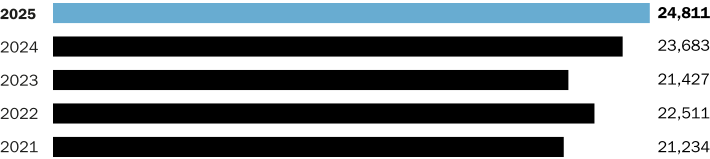
In 2025, currency-neutral revenues for the adidas brand increased 13% for the second consecutive year. This increase was driven by double-digit growth in all markets and channels, as growth expanded meaningfully across categories and sports, enabled by both global and local product creation and activation. Having completed the sale of the remaining Yeezy inventory in 2024, the company’s results for 2025 do not include any Yeezy revenues (2024: around € 650 million). Including Yeezy sales in the prior year, currency-neutral revenues increased 10%. In euro terms, revenues increased 5% to a record level of € 24,811 million in 2025 (2024: € 23,683 million), despite an unfavorable translation impact of more than € 1 billion due to the strengthening of the euro against several currencies.
Net sales
+13%
Brand adidas c.n.
€ 24,811 million
Net sales € in millions
Double-digit growth in both footwear and apparel
Footwear revenues for the adidas brand grew 12% on a currency-neutral basis in 2025. The broader and deeper product offering drove double-digit footwear growth across many categories, including Running, Training, Performance Basketball, and Sportswear. Strong growth in Originals also contributed to the increase in footwear. Apparel sales grew 15% during the year as brand and product momentum continued to expand as planned. Differentiated and locally relevant apparel collections fueled double-digit increases in major categories like Football, Running, Training, and Originals. Accessories grew 6% versus the prior year.
Double-digit increases across categories and sports
On a currency-neutral basis, Performance revenues increased 15% during 2025 as the brand’s breadth of growth continued to expand significantly. In Running, growth accelerated sequentially throughout the year to more than 30%, driven by the record-breaking Adizero footwear family. Adios Pro Evo 2 and Adios Pro 4 models secured multiple major marathon wins, while the Prime X Evo concept shoe enabled a new world record in the 100 kilometers. The award-winning Evo SL, making Adizero accessible at a compelling price point, also contributed to increases across the brand’s running footwear business. In addition, everyday running propositions, such as Supernova, continued to grow strongly alongside matching performance apparel. In Football, new color packs and performance upgrades for the brand’s iconic franchises Predator and F50 drove increases in footwear, while apparel growth was fueled by new season on-pitch kits and culturally inspired collections for the brand’s major clubs as well as the launch of FIFA World Cup 2026 home kits. Double-digit growth in Training was underpinned by the brand’s revamped head-to-toe offerings, including the Dropset and Rapidmove franchises in footwear and the Optime, Essentials, and Power collections in apparel. Several other categories, including Outdoor, Specialist Sports, Performance Basketball, and Motorsport also contributed to the broad-based growth in Performance, on the back of product innovation and newness that resonated strongly with consumers.
Lifestyle revenues for the adidas brand increased 12% during 2025, driven by double-digit growth in both Originals and Sportswear. Demand for the brand’s popular Terrace and retro running offering remained strong and healthy in response to refreshed colorways, new materials, and collaborations tailored to local consumer preferences. The brand’s Low Profile silhouettes also continued to expand, driven by updated looks for the Tokyo, Japan, and Taekwondo franchises, from animal‑print and metallic versions to ballet‑inspired designs. After reintroducing the Superstar with a community-focused approach, the brand sequentially scaled the franchise, backed by a global campaign and market-led activations. Besides the proactive evolution of its classics footwear business, adidas further expanded its lifestyle running and lifestyle football offerings. Following successful incubations, notably through the award-winning Adistar Jellyfish, the brand established models such as the Adistar Control and street‑ready Predator and F50 versions. The momentum of Originals footwear also expanded into apparel, where the classic Firebird and Teamgeist collections saw a step up in demand in response to distinct material updates, including denim and knit, and successful local creation efforts. Collaborations with Pharrell Williams, Oasis, Wales Bonner, Bad Bunny, Edison Chen, Sporty & Rich, and collections co-created by the brand’s retail partners further supported growth in Originals. Within Sportswear, adidas successfully leveraged its strong product momentum in Originals and other major categories into franchises tailored to commercial price points. In addition, innovative products such as the 3D-printed Climacool shoe and revamped Z.N.E. and Soft Lux apparel collections were well received by consumers looking for sport-inspired lifestyle products. SEE PRODUCT AND MARKETING
Double-digit growth in all markets
Currency-neutral net sales for the adidas brand grew at double-digit rates in all markets in 2025, as the company’s market teams successfully executed locally relevant product assortments and activations. Europe (+10%), North America (+10%), and Greater China (+13%) grew revenues at a low-double-digit rate in 2025, implying significant market share gains. Latin America (+22%), Emerging Markets (+17%), and Japan/South Korea (+14%) recorded even faster growth. In all of these markets, growth was broad-based as reflected in strong improvements in both the wholesale and DTC business. see business performance by segment
All channels increasing double digits
From a channel perspective, growth for the adidas brand in 2025 was equally broad-based with double-digit increases in all channels. Strong sell-through rates at retail partners and increased shelf space allocations continued to drive wholesale revenues, which increased 12% on a currency-neutral basis. Own retail revenues were up 13%, driven by strong like-for-like growth in the company’s global fleet of own stores and continued investments into retail doors. E-commerce sales increased 16%, with a continued focus on full-price propositions. As a result, sales in the brand’s DTC business grew 14%.
|
|
2025 |
|
2024 |
|
Change |
|
Change |
|
Brand adidas Change (currency-neutral)1 |
||||||||||||
|---|---|---|---|---|---|---|---|---|---|---|---|---|---|---|---|---|---|---|---|---|---|---|
|
|
|
|
|
|
|
|
|
|
|||||||||||||
Europe |
|
8,136 |
|
7,551 |
|
8% |
|
8% |
|
10% |
||||||||||||
North America |
|
5,087 |
|
5,128 |
|
(1%) |
|
4% |
|
10% |
||||||||||||
Greater China |
|
3,623 |
|
3,459 |
|
5% |
|
9% |
|
13% |
||||||||||||
Emerging Markets |
|
3,510 |
|
3,310 |
|
6% |
|
15% |
|
17% |
||||||||||||
Latin America |
|
2,926 |
|
2,772 |
|
6% |
|
21% |
|
22% |
||||||||||||
Japan/South Korea |
|
1,406 |
|
1,339 |
|
5% |
|
11% |
|
14% |
||||||||||||
|
|
|
|
|
|
|
|
|
|
|
||||||||||||
|
|
|
|
|
|
|
|
|
|
|||||||||||||
Footwear |
|
14,232 |
|
13,977 |
|
2% |
|
7% |
|
12% |
||||||||||||
Apparel |
|
8,764 |
|
7,937 |
|
10% |
|
15% |
|
15% |
||||||||||||
Accessories |
|
1,815 |
|
1,779 |
|
2% |
|
6% |
|
6% |
||||||||||||
|
|
|
|
|
|
|
|
|
|
|
||||||||||||
Net sales by channel2 |
|
|
|
|
|
|
|
|
|
|
||||||||||||
Wholesale |
|
14,833 |
|
14,172 |
|
5% |
|
10% |
|
12% |
||||||||||||
Direct-to-Consumer (DTC) |
|
9,931 |
|
9,490 |
|
5% |
|
9% |
|
14% |
||||||||||||
Own retail |
|
— |
|
— |
|
8% |
|
12% |
|
13% |
||||||||||||
E-commerce |
|
— |
|
— |
|
1% |
|
6% |
|
16% |
||||||||||||
|
|
|
|
|
|
|
|
|
|
|
||||||||||||
Total net sales |
|
24,811 |
|
23,683 |
|
5% |
|
10% |
|
13% |
||||||||||||
|
||||||||||||||||||||||
Cost of sales increase moderately
Cost of sales is defined as the amount paid to third parties for expenses associated with producing and delivering adidas products. In addition, own-production expenses are also included in the cost of sales. However, these expenses represent only a very small portion of total cost of sales. In 2025, cost of sales was € 12,006 million, representing an increase of 3% compared to the prior year level of € 11,658 million. This development mainly reflects the company’s growth.
Gross margin up 0.8 percentage points to 51.6%
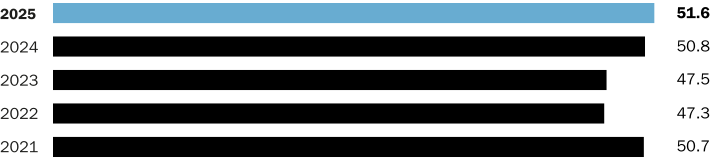
In 2025, gross profit increased 6% to € 12,804 million from € 12,026 million in 2024, while gross margin increased 0.8 percentage points to 51.6% (2024: 50.8%). The positive development reflects lower product and freight costs, a better business mix, as well as a healthy level of full-price sales, which more than offset the unfavorable impacts from currencies and higher US tariffs.
Gross margin1 in %
Royalties and other operating income
Royalty and commission income was flat at € 81 million in 2025 (2024: € 81 million), while other operating income declined 77% to € 41 million from € 174 million in 2024. The decrease in other operating income was mainly attributable to a one‑time accruals release that was recorded in the prior year.
Other operating expenses decline
Other operating expenses, including depreciation and amortization, mainly consist of marketing and point-of-sale, distribution and selling, as well as general and administration expenses. In 2025, other operating expenses were down 1% to € 10,871 million (2024: € 10,945 million). As a percentage of sales, other operating expenses decreased 2.4 percentage points to 43.8% from 46.2% in 2024.
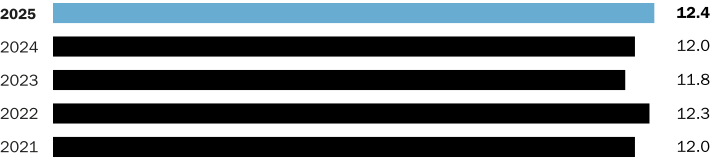
Marketing and point-of-sale expenses increased 8% to € 3,079 million in 2025 (2024: € 2,841 million). These investments included ‘You Got This,’ adidas’ multi-year brand campaign that features a series of global and local chapters and ‘The Original,’ a campaign that connects young generations with Originals’ iconic silhouettes. adidas also executed several localized product campaigns and activations. These featured product launches, such as the Evo SL, the Superstar, the FIFA World Cup 2026 home kits and the official match ball, as well as brand partner moments such as the ones with Liverpool FC and Oasis, supported by a multitude of market-led physical events to connect with local sports and streetwear culture. In addition, the increase reflects new and extended partnerships, such as the Audi F1 team, Penn State, the Argentine Football Federation, and Anthony Edwards, among many others. As a percentage of sales, marketing and point-of-sale expenses increased 0.4 percentage points to 12.4% (2024: 12.0%).
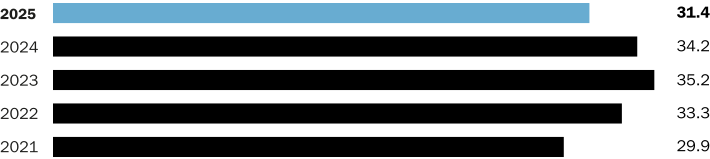
Operating overhead expenses decreased 4% to € 7,792 million (2024: € 8,103 million), as the company continued to invest into its sales and distribution capabilities while managing its overall cost base. As a percentage of sales, operating overhead expenses decreased 2.8 percentage points to 31.4% from 34.2% in 2024. Within operating overhead expenses, distribution and selling expenses decreased 1% to € 5,877 million in 2025 from € 5,936 million in the prior year. As a percentage of sales, distribution and selling expenses decreased 1.4 percentage points to 23.7% from 25.1% in 2024. General and administration expenses were down 12% to € 1,885 million (2024: € 2,138 million). As a percentage of sales, general and administration expenses were down 1.4 percentage points to 7.6% (2024: 9.0%). see note 30
Marketing and point-of-sale expenses in % of net sales
Operating overhead expenses in % of net sales
EBITDA increases strongly
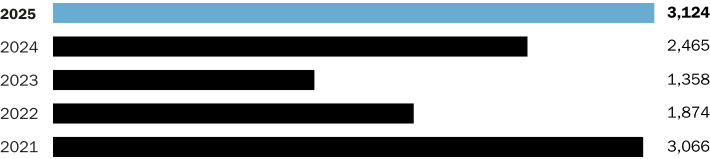
Earnings before interest, taxes, depreciation, and amortization, as well as impairment losses/reversal of impairment losses on property, plant, and equipment; right-of-use; and intangible assets (EBITDA) increased 27% to € 3,124 million in 2025 (2024: € 2,465 million). Total depreciation and amortization as well as impairment losses/reversal of impairment losses for tangible, right-of-use, and intangible assets was relatively flat at € 1,135 million in 2025 (2024: € 1,180 million).
EBITDA1 € in millions
Operating margin reaches 8.3%
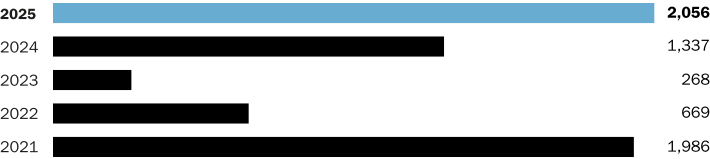
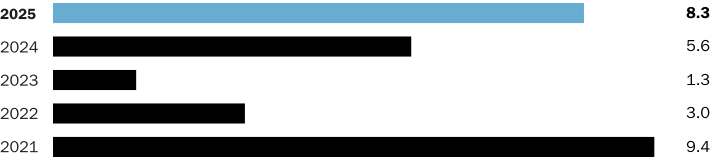
Operating profit increased 54%, or more than € 700 million in absolute terms, to € 2,056 million in 2025 (2024: € 1,337 million). This reflects an operating margin of 8.3% in 2025, 2.6 percentage points above the prior-year level (2024: 5.6%). Having completed the sale of the remaining Yeezy inventory in 2024, there was no Yeezy contribution to the company’s operating profit in 2025 (2024: around € 200 million).
Operating margin
8.3%
+2.6PP
Operating profit € in millions
Operating margin1 in %
Net financial result stable while tax rate improves
Financial income decreased 27% to € 74 million in 2025 (2024: € 101 million), mainly reflecting lower interest income. Financial expenses declined 2% to € 310 million compared to € 317 million in 2024, as currency effects, which were less unfavorable than in the prior year, were partly offset by negative hyperinflation-related effects. Consequently, the company’s net financial result was largely stable at negative € 236 million (2024: negative € 215 million). The company’s tax rate improved 2.2 percentage points to 24.3% in 2025 (2024: 26.5%), reflecting the normalization of profitability levels. see note 32 see note 34
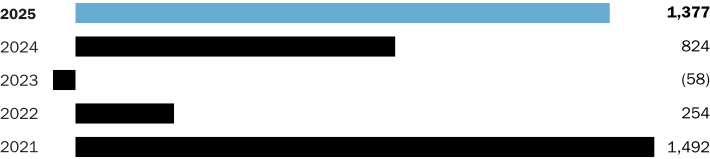
Net income from continuing operations increases to € 1,377 million
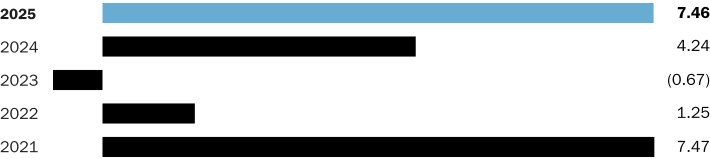
Driven by significant business improvements in 2025, net income from continuing operations improved strongly to € 1,377 million (2024: € 824 million). Taking into consideration € 45 million of net income attributable to non-controlling interests (2024: € 68 million), both basic and diluted earnings per share (EPS) from continuing operations reached € 7.46 (2024: € 4.24).
Net income/(loss) from continuing operations € in millions
Basic earnings per share in €
Net income attributable to shareholders increases to € 1,340 million
In 2025, adidas incurred gains from discontinued operations of € 8 million, net of tax, related to the Reebok divestiture (2024: € 8 million). The company’s net income attributable to shareholders, which, in addition to the net income from continuing operations, considers the gains from discontinued operations as well as net income attributable to non-controlling interests, almost doubled to € 1,340 million in 2025 (2024: € 764 million). As a result, both basic and diluted EPS from continuing and discontinued operations increased 75% to € 7.51 in 2025 versus € 4.28 in 2024. The total number of shares outstanding was 178,665,018 at the end of 2025 (2024: 178,549,084). The average number of shares used in the calculation of basic earnings per share (EPS) was 178,559,220 (2024: 178,549,084). For the calculation of diluted earnings per share (EPS), the average number of shares used was 178,565,330 (2024: 178,563,385). see note 35
Would you like to learn more about our expectations for 2026?
More about the Outlook