
Metrics and Targets
E3-3 – Targets related to water and marine resources
Addressing water withdrawal and water consumption in our supply chain
To reduce the water withdrawal across our supply chain, we promote more efficient water use in our production processes. To achieve this, in 2020 we set a five-year water intensity reduction target for our global supply chain: reduce the overall water intensity at adidas’ water-intensive Tier 2 production facilities by 40% by 2025 (baseline: 2017; baseline value: approximately 0.0157 m3/US $ – m3/total product output value in US $). This target was established to consider the quantity and quality of water from intensive water usage manufacturing processes, and it is not yet connected with a specific water risk level.
Moreover, the target and its related metric are adidas specific and not required by legislation. For this target, individual facilities were expected to reduce their water intensity by at least 5% each year, resulting in a decrease of the amount of water used – e.g., by increasing the recycling rate of water used in production and minimizing freshwater intake. The target contributes to achieving the reduction in water withdrawal and water consumption, as stated in the adidas Environmental Guidelines.
This water intensity target was based on facility-level water use in activities and processes, with a focus on WWF-identified hotspots1 in the textile supply chain where adidas has direct influence. While this target was not initially developed with consideration of the specific local water basin conditions of our suppliers, the actions taken to achieve it have always accounted for local capabilities and natural conditions. This approach ensured that implementation was responsive to the unique challenges and opportunities at each site. Looking ahead, we plan to align future freshwater targets with the Science Based Targets Network (SBTN) requirements for nature-related goals, building on insights gained from our previous actions and resources, as described in E3-2. This will enable us to better integrate local water basin conditions into our target-setting process and further enhance our impact on water and marine resources.
In the reporting year, we exceeded our 2025 water-intensity reduction target of 40%, achieving a 43% reduction (2024: 34%). This progress reflects the commitment of our Tier 2 suppliers, who continue to improve the water management practices within their operations. Through our annual assessment process with suppliers and third-party auditors, we identified improvement opportunities and continuously bring efficiency to the overall process.
Water intensity at Tier 2 production facilities
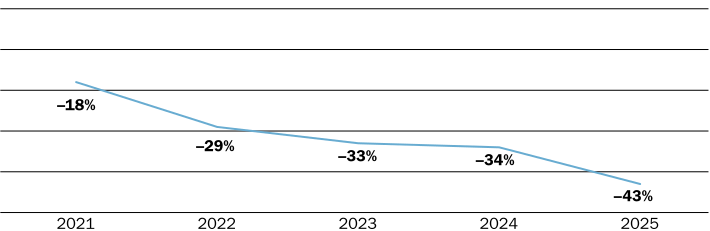
The target performance was tracked and verified on an annual basis, based on primary consumption data reported by each facility into the adidas system and verified by third-party auditors. Water intensity is calculated as the volume of water used in a specific facility (in m3) per product output value (in US dollars). Data covers a twelve-month period (from January to December) and a third-party auditor validates the data before we use it for the KPI calculation. The metric was developed in accordance with relevant industry standards, baseline assessments, and best practices among our suppliers and peers.
For targets related to water quality, such as quality of wastewater discharge and chemical input management targets, please see the following section: See ESRS E2-3 – Targets related to pollution
1 Morgan, A.J., Luthra, P., Parma, M. and Petrie, L. (2022) Eau Courant: Water stewardship in apparel and textiles – Part I, Water and the Industry’s value chain. WWF-Germany.