
Metrics and Targets
E5-3 – Targets related to resource use and circular economy
To address the multifaceted challenges of circular economy, resource use, and waste management, and to effectively steer our various efforts across these interconnected topics, we have defined specific targets related to these issues. For all targets set, we rely on scientific evidence and upcoming regulatory frameworks, such as the Ecodesign for Sustainable Products Regulation (ESPR), where they exist, and we are guided by the objectives outlined in our Circularity Position Paper. These targets are set by evaluating industry availability of resources and infrastructure that our suppliers have access to. The targets are then benchmarked against industry practices and validated during informal interactions with stakeholders.
10% of polyester to come from recycled textile waste by 2030: This target aims to increase closed-loop recycled polyester, shifting material usage from plastic bottles to textile waste as feedstock, minimizing the use of virgin raw materials, thereby enhancing our commitment to circularity. We are convinced that this initiative also positions us to meet anticipated regulatory requirements for responsible end-of-life management of our products. The first products with textile-to-textile recycled polyester are planned for 2026. The target applies to all polyester used in our products and aligns with the objectives of the Responsibly Sourced Material SOPs.
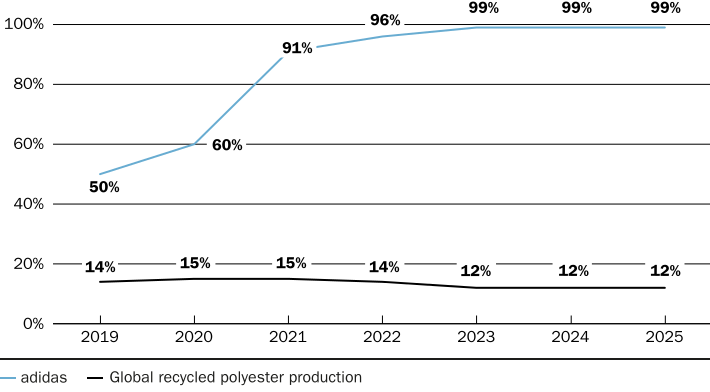
Our target to use 100% recycled polyester wherever technically possible by the end of 2024 has been maintained moving forward for all polyester used in our products, ensuring we do not revert to using virgin polyester. With this commitment and achievement, our share of recycled polyester adoption has been exceeding the level of recycled polyester in global polyester production for several years1 (see the graph below). The integrity of the recycled materials used is certified by recognized third-party certifications such as the Global Recycled Standard (GRS) and the Recycled Claim Standard (RCS). These certifications guarantee a robust chain of custody and minimize the risks of unauthorized mixing or swapping of materials. This target is specific to the increase of circular material use and the minimization of virgin raw materials, and is aligned with the objectives of the Responsibly Sourced Material SOPs.
Recycled polyester share of total polyester use
-
100% third-party certified cotton: This target is aligned with the Sustainably Sourced Renewable Materials standards of Textile Exchange. Since the end of 2018, 100% of the cotton we use has come from certified sources, including organic, recycled, and other third-party certified cotton. The target covers the total volume of cotton sourced globally and is tracked on a yearly basis. In 2025 we met this target again. For detailed data on the 2025 performance, please refer to the Resource inflows section below. This target is specific to sustainable sourcing and use of renewable resources and is aligned with the objectives of the Responsibly Sourced Material SOPs.
-
Deforestation and conversion free (DCF) bovine leather supply chain by 2030: This target is specific to sustainable sourcing and use of renewable resources, and is aligned with the objectives of the Standards on animal-derived materials. SEE ESRS E4-4 – Targets related to biodiversity and ecosystems
-
98% of waste from Tier 1 and Tier 2 suppliers diverted from landfills by 2025: This target is specific to waste management. It was set in 2021 based on industry benchmarks, and is aligned with our waste management guidelines and waste diversion program to assist our suppliers in enhancing waste segregation during manufacturing, reuse of non-hazardous waste, and focusing on recycling or waste-to-energy. Expanding the program globally resulted in a collective landfill diversion rate of 95% among enrolled suppliers in 2025. The slight change from last year’s 96% reflects the onboarding of new suppliers, which naturally adds complexity. Despite this, overall performance remains strong, and the program continues to scale effectively. This target refers to the recycling and waste-to-energy layers of the waste hierarchy, and is aligned with the objectives of the adidas Environmental Guidelines and Waste Management Guidelines.
As explained earlier, the circular ecosystem in the apparel and footwear industry is in the early stages of development. Industry average durability and recyclability metrics and standards are still under development. Product design guidelines for these important areas can only be provided, and targets related to resource outflows can only be set once such standards are in place, which are currently under discussion in different research and policy forums related to the EU Product Environmental Footprint Category Rules (PEFCR) and the Ecodesign for Sustainable Products Regulation (ESPR).
All of the above targets are voluntary and not mandated by law.
E5-4 – Resource inflows
We continued to increase the share of recycled and sustainably sourced renewable materials. In 2025, 60% of the materials used for our products and packaging were recycled or sustainably sourced renewable materials, contributing to our future ambitions and targets (2024: 56%).
Materials used in products: adidas’ product portfolio includes apparel, footwear, as well as accessories. We outsource most of our production to independent manufacturing partners and do not purchase any significant amounts of materials or components of our products directly. We keep records of the materials used in our products in our systems. For this information, we rely on receiving accurate data from our suppliers.
Materials used in packaging: Products are packaged in the factory for protection, such as against humidity and dust. The packaging material is either paper-based (i.e., shoe boxes) or recycled low-density polyethylene (rLDPE) (i.e., polybags for apparel and some types of accessories). Additionally, paper-based transport packaging (i.e., cartons, corrugate) is used to ship products.
Our packaging is 97% paper-based (2024: 97%), with 85% made from recycled content (2024: 85%). Plastic packaging represents 3% of our packaging materials (2024: 3%), of which 98% is recycled LDPE (2024: 83%). Several of our distribution centers have started to implement reusable transport packaging and continue to reduce packaging volume by optimizing box sizes and the number of shipments. However, we are not yet able to report quantitative information on the impact these initiatives have on packaging reduction.
Other resource inflows: We currently still lack reliable data, except for water withdrawal during production processes, with more information available in the following section. SEE ESRS E3 – WATER AND MARINE RESOURCES
|
|
2025 |
|
2024 |
||||||||||||||||
|---|---|---|---|---|---|---|---|---|---|---|---|---|---|---|---|---|---|---|---|---|
|
|
Tonnes |
|
% of total |
|
Tonnes |
|
% of total |
||||||||||||
Biological materials2 |
|
|
|
|
|
|
|
|
||||||||||||
Paper and cardboard |
|
145,655 |
|
21% |
|
128,174 |
|
22% |
||||||||||||
Cotton |
|
64,505 |
|
9% |
|
54,883 |
|
9% |
||||||||||||
Leather |
|
31,304 |
|
5% |
|
24,691 |
|
4% |
||||||||||||
Natural rubber |
|
10,896 |
|
2% |
|
9,373 |
|
2% |
||||||||||||
Other biological materials |
|
3,876 |
|
1% |
|
1,899 |
|
0% |
||||||||||||
Total biological materials |
|
256,236 |
|
37% |
|
219,020 |
|
37% |
||||||||||||
Thereof, sustainably sourced3 |
|
242,544 |
|
95% |
|
188,918 |
|
86% |
||||||||||||
Technical materials4 |
|
|
|
|
|
|
|
|
||||||||||||
Polyester |
|
156,917 |
|
23% |
|
130,365 |
|
22% |
||||||||||||
Synthetic rubber |
|
98,098 |
|
14% |
|
67,810 |
|
12% |
||||||||||||
EVA |
|
51,751 |
|
7% |
|
48,931 |
|
8% |
||||||||||||
Polyurethane (PU) |
|
20,395 |
|
3% |
|
24,478 |
|
4% |
||||||||||||
Other technical materials |
|
107,049 |
|
16% |
|
97,538 |
|
17% |
||||||||||||
Total technical materials |
|
434,210 |
|
63% |
|
369,122 |
|
63% |
||||||||||||
Thereof, sustainably sourced5 |
|
173,114 |
|
40% |
|
141,388 |
|
38% |
||||||||||||
Total materials inflows |
|
690,446 |
|
100% |
|
588,142 |
|
100% |
||||||||||||
|
||||||||||||||||||||
For the definition of sustainably sourced materials, the cascading principle has been applied. In addition, we use the following certifications for sustainably sourced materials:
For biological materials:
For cotton: Better Cotton (mass balanced), US Cotton Trust Protocol, Organic Content Standard (OCS), Global Organic Textile Standard (GOTS), Global Recycled Standard (GRS), Recycled Claim Standard (RCS)
For leather: Leather Working Group (LWG)
For wool: Responsible Wool Standard (RWS)
For down: Responsible Down Standard (RDS)
For technical materials:
Global Recycled Standard (GRS), Recycled Claim Standard (RCS)
|
|
2025 |
|
2024 |
||||||||||
|---|---|---|---|---|---|---|---|---|---|---|---|---|---|---|
|
|
Tonnes |
|
% of total |
|
Tonnes |
|
% of total |
||||||
Secondary (recycled) materials |
|
|
|
|
|
|
|
|
||||||
Recycled polyester |
|
155,309 |
|
99% |
|
129,388 |
|
99% |
||||||
Recycled paper and cardboard |
|
123,078 |
|
85% |
|
108,307 |
|
85% |
||||||
Other recycled materials |
|
17,824 |
|
17% |
|
12,048 |
|
12% |
||||||
Total secondary materials2 |
|
296,212 |
|
43% |
|
249,743 |
|
42% |
||||||
|
||||||||||||||
Recycled textile materials are GRS- or RCS-certified. For EVA, rubber, and non-textile materials, we partially rely on supplier self-declaration, as certification is not yet available for some of the recycling processes used in footwear production. We do not purchase or track components or intermediary products, and therefore, the reuse of such components or intermediary products is not a business situation we encounter. For packaging materials, data are based on LCA data.
Explanatory notes to our reported material use data
The presented product and packaging material use data are based on the following calculation methodologies and sources:
Materials used in adidas products: Use data are based on Spring/Summer 2025 and Fall/Winter 2025 seasons.
Materials used for packaging: Due to the decentralized nature of our distribution, it is difficult to collect primary data for packaging. Packaging material consumption is calculated based on 2025 sales data (volume by channel) and average packaging weights per product division (based on primary data collected in 2021). The ratio between virgin and recycled materials for polybags is based on primary data collected in 2021, and recycled content for cardboard is based on LCA data (EU-28: Corrugated board 2018). The average weights for secondary (transport) packaging are based on PEFCR. Due to the fact that we use recognized and widely applied data sources and methodologies, we consider our assumptions and calculations to be solid. However, we aim to start collecting primary packaging data for key parts of the supply chain in the upcoming years to improve accuracy in the future.
Polyester, cotton, polyamide, wool, man-made cellulosic fibers, down as well as leather: Material use is derived from actual consumption data in the bill of materials as reported by Tier 1 suppliers and the material composition information provided by our Tier 2 suppliers. Due to the complexity stemming from the product construction of leather-based footwear, we perform control checks on the weight of leather used to calculate the final leather consumption.
Polyester trims: Material use is reported in ‘Other synthetic materials.’
Rubber, EVA, PU, and other synthetic polymers for footwear bottom parts: Material use is calculated by extrapolating from data reported by Tier 1 and Tier 2 suppliers in the countries of origin, who account for 90% of the total footwear production volume.
Silica (as part of other technical materials): Some country-specific material consumption volume is interpolated by applying a ratio based on the already available primary data gathered.
E5-5 – Resource outflows
There is currently no industry standard that defines circular economy principles for designing apparel and footwear products. Nonetheless, we are already following an approach that aims to consider sustainable resource use where possible. We will eventually adjust our approach when the expected adoption of the ESPR and other similar regulations provides more clarity on definitions and standards.
Durability, repairability, and recyclability are neither legally defined nor standardized in the apparel and footwear industry yet. One reason for this is the wide variety of product types and product purposes in scope. As part of the EU’s PEFCR and ESPR, several multi-stakeholder working groups are working to define standards in these areas. We plan to align our approach with regulations and standards as soon as they become available.
-
Durability: While there are currently no industry average metrics or standards in place that determine durability of apparel and footwear, we are constantly testing the quality and performance of our products. More information on our testing protocols can be found within this chapter. SEE ESRS E5-2 – ACTIONS AND RESOURCES RELATED TO RESOURCE USE AND CIRCULAR ECONOMY
-
Repairability: There is no average metric or standard for repairability in the apparel and footwear industry. Most of our apparel products can be repaired by consumers themselves or by a tailor. Our footwear can be repaired by shoemakers, however, some of our technical footwear products and sports accessories may not be repairable due to their design or construction. In case of defective products, we provide the legally mandated warranty. We have also piloted consumer repair services to understand how we can better serve consumers in this area. SEE ESRS E5-2 – actions and resources related to resource use and CIRCULAR economy
-
Recyclability: As mentioned in earlier sections, recycling technology for apparel and footwear is in the early stages of development. Due to the lack of a standardized definition of recyclability and the respective infrastructure (collecting, sorting, and recycling), it is not possible to claim recyclability for our products at this time. There is currently no established process for the treatment of textile waste in the EU. While some countries have initiated efforts in this area, current practices vary significantly from country to country. We continuously monitor developments in this area and remain committed to supporting the creation of a circular ecosystem.
As for the packaging materials, we use only mono-material packaging for our plastic and paper packaging, which is fully recyclable. The LDPE polybags used for apparel and some types of accessories are also recyclable.
1 Source: Textile Exchange Materials Market Report 2025; 2025 value for global apparel industry is an estimate.